When Appraisers Can't Take the Assignment: The Hidden Bottleneck in Housing Affordability
When Appraisers Can't Take the Assignment: The Hidden Bottleneck in Housing Affordability
The housing affordability crisis has pushed lenders to explore alternative property types and non-traditional financing options. Manufactured homes, energy efficient properties, properties with accessory dwelling units, mixed-use properties—these aren't exotic edge cases anymore. They're legitimate solutions for borrowers who are being priced out of traditional single-family homes.
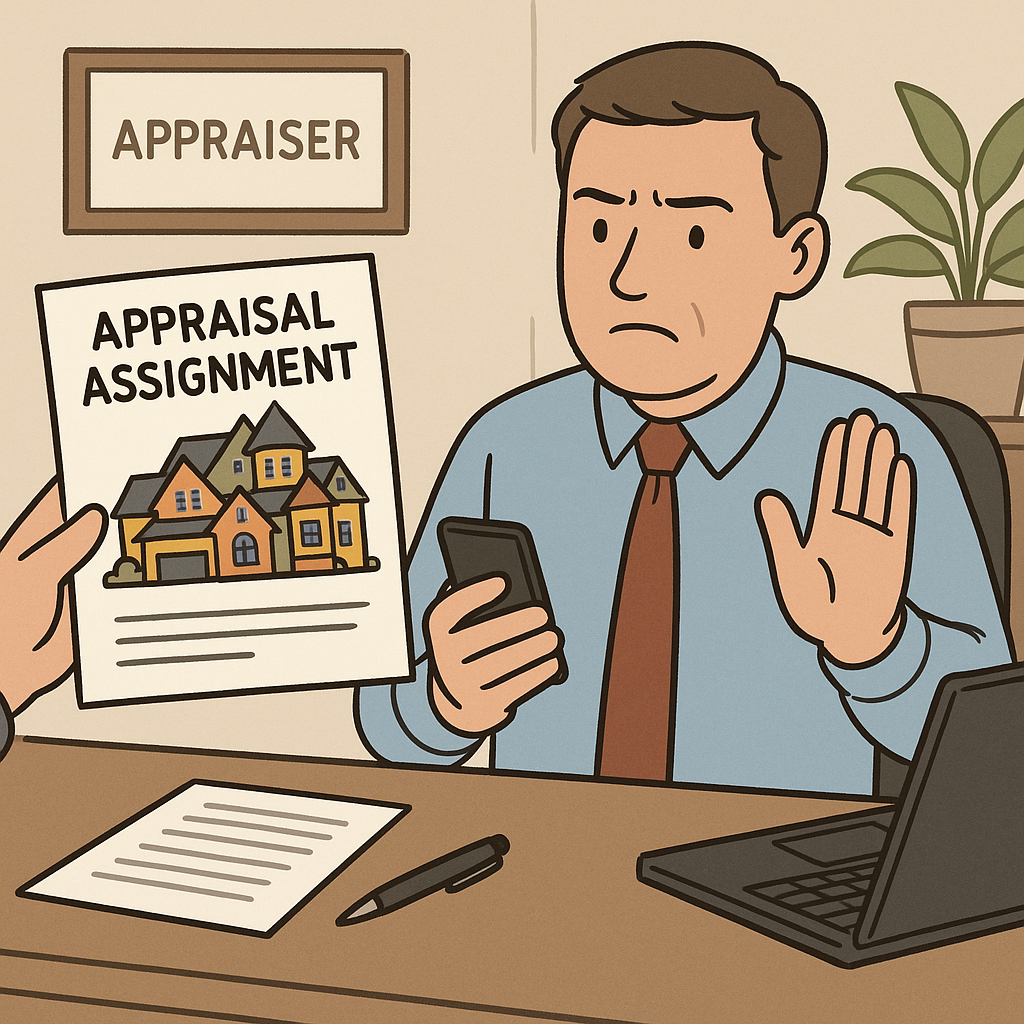
But here's the problem we keep hearing from AMC operators and lender executives: appraisers are declining these assignments in droves. Not because they don't want the work, but because they're legitimately uncertain about how to handle these property types correctly. When an appraiser turns down a manufactured home assignment or a property with an ADU, that's not just a scheduling hiccup. That's a borrower who might lose their chance at homeownership because the valuation pipeline just broke down.
The Real Reason Appraisers Decline Assignments
After years working with appraisers and managing appraisal operations, we've seen this pattern repeat itself: an appraiser gets an order for a property type they haven't dealt with recently, they spend fifteen minutes trying to remember the specific GSE requirements, they can't quickly find definitive guidance, and they decline the assignment. It's a rational business decision when you're facing potential liability.
The appraiser isn't incompetent. They're being smart. They know that a manufactured home has different foundation requirements than site-built. They know that ADUs have specific measurement and valuation protocols. They know that getting it wrong means revision requests, potential state board complaints, and damaged relationships with AMC clients. When the choice is between taking an assignment they're not 100% confident about versus taking a straightforward single-family comp assignment, the safe choice wins every time.
This creates a vicious cycle. Appraisers avoid certain property types because they lack confidence. Because they avoid them, they never build experience. The less experience they have, the more they avoid these assignments. Meanwhile, lenders are left telling borrowers that financing options that should be available simply aren't, because they can't get reliable valuations.
The Training Gap Nobody Wants to Talk About
Here's an uncomfortable truth from the appraiser education side: most appraisers completed their training years or even decades ago. The curriculum they learned was built around traditional single-family detached homes. Manufactured homes might have gotten a chapter. ADUs weren't even on the radar for most appraisal courses ten years ago because they weren't common in most markets.
Continuing education requirements help, but they're broad. An appraiser might take their required hours on ethics, USPAP updates, and general market conditions without ever diving deep into the specifics of valuing a manufactured home on leased land or understanding how to properly measure and value an ADU conversion.
The result is thousands of licensed, competent appraisers who simply don't have the specific knowledge base to confidently handle property types that are increasingly important for housing affordability. And expecting them to piece together guidance from scattered Fannie Mae Selling Guide updates, FHA handbooks, and lender-specific overlays during a rushed assignment is unrealistic.
Where Technology Actually Solves the Problem
This is exactly the kind of operational problem that technology should solve—not by replacing appraiser judgment, but by putting the right information in front of them at exactly the right moment.
When an appraiser opens an assignment in our platform for a manufactured home, they're not left to hunt through the Selling Guide on their own. The system recognizes the property type and surfaces the specific requirements they need to verify: foundation type and certification, HUD certification label and data plate, whether it's classified as real or personal property, transportation apparatus removal, permanent utility connections. Not generic checklists, but the actual GSE and agency requirements that apply to this specific assignment.
For ADU properties, the guidance is equally specific: how to measure the ADU, whether to include it in the gross living area calculation or treat it separately, how to search for comparable sales with similar additional units, how to address income considerations if applicable, and what disclosures are required in the report narrative.
This isn't about dumbing down the appraisal process. It's about giving experienced professionals the specific technical guidance they need to expand their scope of work confidently. An appraiser who has completed 500 single-family appraisals has strong valuation skills. They know how to analyze markets, select comparables, and make adjustments. They just need the property-type-specific requirements at their fingertips.
The Ripple Effect for Lenders and Borrowers
When appraisers have the tools and confidence to take on a broader range of property types, the entire lending pipeline opens up. That AMC that could only find two appraisers willing to handle manufactured homes in a given market suddenly has fifteen qualified appraisers who can competently handle those assignments. Turn times improve. Costs stabilize because you're not paying premiums for specialized appraisers. Most importantly, borrowers get access to financing for homes they can actually afford.
Consider a typical scenario: a first-time homebuyer finds a property with a newly permitted ADU. The rental income from that ADU could help them qualify for the mortgage and make the monthly payment sustainable. But if the appraiser declines the assignment because they're not confident handling the ADU valuation requirements, the lender has to scramble to find another appraiser, the closing gets delayed, or worse, the deal falls apart entirely.
Now multiply that scenario across thousands of transactions involving manufactured homes, condotels, mixed-use properties, and other non-traditional property types. The cumulative effect is that entire categories of affordable housing become difficult or impossible to finance, not because they're bad collateral, but because the valuation infrastructure can't support them efficiently.
Building Defensibility Into Every Report
The concern we hear most frequently from appraisers is about defensibility. They want to know that when they submit a report on a property type they don't handle every day, it's going to meet lender requirements and GSE guidelines without extensive revisions. They're worried about staking their professional reputation on an assignment where they're not completely certain about every requirement.
This is where technology support becomes critical. It's not enough to just provide guidance—the platform needs to help appraisers build reports that are structurally sound and compliant from the start. That means prompting for the right photos, ensuring required addenda are included, flagging potential issues before submission, and helping appraisers craft narratives that address the specific concerns lenders and underwriters will have for these property types.
When an appraiser submits a manufactured home appraisal through our system, they've been guided through documentation of the HUD data plate, prompted to photograph the foundation system, reminded to verify site ownership versus home ownership, and helped to address comparability issues in their narrative. The resulting report isn't just complete—it's defensible because it proactively addresses the questions an underwriter will ask.
Key Takeaways
- Housing affordability solutions often involve non-traditional property types that many appraisers avoid due to training gaps and uncertainty about specific requirements
- Appraisers declining assignments isn't about unwillingness to work—it's a rational response to liability concerns when they lack confidence in property-type-specific requirements
- Technology can bridge the knowledge gap by delivering specific, contextual guidance based on property type, helping experienced appraisers expand their scope competently
- When appraisers have the tools to confidently handle diverse property types, the entire lending pipeline becomes more efficient and borrowers gain access to more affordable housing options
- Defensibility is the key concern—appraisers need assurance that their reports will meet lender and GSE requirements without extensive revisions, which proper technology support provides